2026 Long-Term Disability Benefits: 60% Wage Replacement Guide

Anúncios
Understanding your 2026 long-term disability benefits is essential for financial security, as these plans typically replace 60% of your income if you cannot work due to illness or injury, offering crucial protection.
Preparing for the unexpected is a cornerstone of sound financial planning, and understanding your 2026 long-term disability benefits is a critical component. This guide will walk you through the nuances of these benefits, particularly focusing on how a 60% wage replacement can safeguard your financial stability in the face of unforeseen circumstances.
The core of long-term disability: what it means for you
Long-term disability (LTD) insurance is a vital safety net designed to protect your income if you become unable to work for an extended period due to illness or injury. It’s not just about severe accidents; chronic illnesses, mental health conditions, and debilitating injuries are common reasons individuals rely on these benefits. As we look towards 2026, understanding the foundational aspects of LTD becomes even more important as economic landscapes and policy details can subtly shift.
Typically, LTD policies aim to replace a significant portion of your income, often around 60%. This percentage is designed to help you cover essential living expenses, maintain your quality of life, and avoid financial hardship during a challenging time. It’s crucial to distinguish LTD from short-term disability, which covers shorter periods of absence, usually a few weeks to a few months. LTD, on the other hand, kicks in after a waiting period (elimination period) and can provide benefits for years, or even until retirement age, depending on the policy terms.
Key characteristics of long-term disability plans
Most LTD plans share common features, though specifics can vary widely between providers and employer-sponsored plans. Knowing these characteristics helps in evaluating your coverage.
- Benefit percentage: This is the portion of your gross monthly income the policy will replace, most commonly 60%.
- Elimination period: The waiting period after your disability begins before benefits start paying out, often 90 or 180 days.
- Benefit period: The maximum length of time you can receive benefits, which might be a set number of years (e.g., 2, 5, 10 years) or until a specific age (e.g., 65).
Understanding these core components allows you to assess how well your current or prospective LTD plan aligns with your financial needs and risk tolerance. It’s not merely about having coverage, but having adequate coverage that truly protects you when you need it most.
Understanding the 60% wage replacement standard
The 60% wage replacement figure is a common benchmark in long-term disability policies, but its implications are often misunderstood. This percentage is designed to strike a balance between providing substantial financial support and discouraging malingering, while also accounting for the tax-free nature of some disability benefits. When your benefits are paid, they often come with tax advantages, meaning the 60% might feel closer to your take-home pay than it initially appears.
For example, if your gross monthly income is $5,000, a 60% wage replacement would mean you receive $3,000 per month in benefits. While this is less than your full salary, it’s often sufficient to cover most essential expenses, especially when considering that disability benefits may not be subject to income tax if you paid the premiums with after-tax dollars. This tax treatment is a significant factor in evaluating the true value of your benefit.
Factors influencing your actual benefit amount
While 60% is a common baseline, several factors can influence the actual amount you receive:
- Policy maximums: Many policies have a cap on the maximum monthly benefit, regardless of your income.
- Offset provisions: Benefits from other sources, like Social Security Disability Insurance (SSDI) or workers’ compensation, may reduce your LTD payout.
- Definition of income: What constitutes ‘income’ for benefit calculation can vary. It might include base salary but exclude bonuses or commissions.
It’s crucial to review your policy document carefully to understand how your specific benefit will be calculated and what potential offsets might apply. A clear understanding of these details ensures there are no surprises during a time when financial certainty is paramount.
Eligibility requirements for 2026 long-term disability benefits
Securing long-term disability benefits in 2026, as in previous years, hinges on meeting specific eligibility criteria set forth by your insurance provider. These requirements are in place to ensure that benefits are provided to those genuinely unable to perform their occupational duties due to a qualifying illness or injury. The definition of ‘disability’ itself is often the most critical factor, and it can vary significantly between policies.
Most policies start with an ‘own occupation’ definition, meaning you are considered disabled if you cannot perform the substantial duties of your specific job. After a certain period, often 24 months, many policies transition to an ‘any occupation’ definition, which is stricter. Under ‘any occupation,’ you are only considered disabled if you cannot perform the duties of any occupation for which you are reasonably suited by education, training, or experience. This shift can be a major hurdle for claimants.
Common disqualifying factors and exclusions
While policies aim to provide broad coverage, certain conditions or circumstances are typically excluded or may lead to disqualification. Being aware of these can prevent future complications.
- Pre-existing conditions: Many policies have clauses limiting or excluding coverage for conditions you had before the policy’s effective date.
- Self-inflicted injuries: Disabilities resulting from intentional self-harm or attempted suicide are almost always excluded.
- Acts of war or criminal activity: Injuries sustained during participation in illegal activities or acts of war are typically not covered.
- Lack of medical evidence: Insufficient medical documentation to support your disability claim is a common reason for denial.
It is essential to thoroughly read your policy’s terms and conditions, paying close attention to the definitions of disability and any exclusion clauses. Understanding these details upfront can save considerable stress and potential disputes during the claims process.
The claims process for long-term disability in 2026
Initiating a long-term disability claim can feel overwhelming, especially when you are already dealing with health challenges. However, understanding the process step-by-step can help streamline it and increase your chances of a successful outcome. The process generally begins with notifying your employer and the insurance company as soon as you anticipate or experience a disability that will prevent you from working for an extended period.
After notification, you will typically need to complete a claimant statement, which details your medical condition, work history, and how your disability affects your ability to perform your job. Your physician will also need to submit a statement outlining your diagnosis, prognosis, treatment plan, and functional limitations. The insurance company will then review all submitted documentation, which may include medical records, vocational assessments, and independent medical examinations.
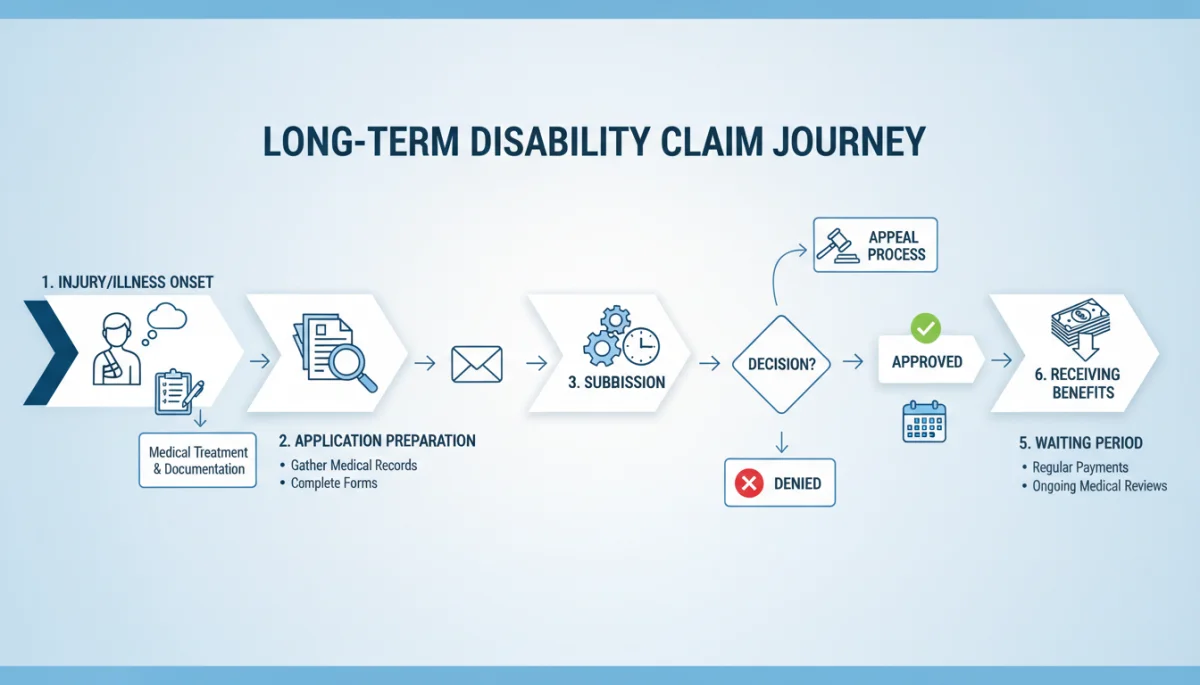
Steps to a successful claim submission
A well-prepared claim is your best defense against delays or denials. Focus on thoroughness and accuracy.
- Gather comprehensive medical records: Ensure all relevant doctor’s notes, test results, and treatment plans are available.
- Be detailed in your statements: Clearly explain how your condition prevents you from performing your job duties.
- Communicate openly with your doctors: Make sure your physicians understand the impact of your condition on your work and accurately document it.
- Meet all deadlines: Respond promptly to any requests for information from the insurance company.
The insurance company’s goal is to assess whether your condition meets their policy’s definition of disability. Providing clear, consistent, and comprehensive information from the outset is paramount. This proactive approach can significantly reduce the back-and-forth often associated with disability claims.
Maximizing your long-term disability benefits: tips and strategies
Securing your 2026 long-term disability benefits is not just about filing a claim; it’s about strategically managing your situation to ensure you receive the full benefits you are entitled to. This involves careful planning, diligent record-keeping, and understanding your rights. One of the most crucial aspects is maintaining open and consistent communication with your healthcare providers. They are your primary advocates in establishing the medical necessity of your disability claim.
Beyond medical documentation, understanding the nuances of your policy can be a game-changer. For instance, some policies offer rehabilitation benefits or return-to-work assistance, which can help you transition back to employment if your condition improves. Others might have cost-of-living adjustments (COLAs) to help your benefits keep pace with inflation. Being aware of these features allows you to leverage your policy to its fullest potential.
Proactive steps for benefit optimization
Taking a proactive stance can significantly impact the outcome and longevity of your benefits.
- Review your policy annually: Understand any changes to terms, definitions, or benefits.
- Maintain detailed records: Keep copies of all medical records, correspondence with the insurer, and financial documents.
- Seek professional advice: Consult with a disability attorney or financial advisor if you encounter difficulties or have complex questions.
- Comply with treatment plans: Adhering to your doctor’s recommendations demonstrates your commitment to recovery and strengthens your claim.
By actively managing your claim and understanding your policy’s full scope, you can navigate the complexities of long-term disability with greater confidence and secure the financial protection you need. This proactive approach ensures you’re not just a recipient of benefits, but an informed participant in your financial well-being.
Future outlook: what to expect for long-term disability in 2026 and beyond
The landscape of long-term disability benefits is not static; it evolves with changes in healthcare, employment trends, and economic conditions. As we look towards 2026 and beyond, several trends may influence how these benefits are structured, accessed, and administered. Increased awareness of mental health conditions, for example, is leading to more inclusive definitions of disability that recognize psychological impairments as equally debilitating as physical ones. This shift could mean broader coverage for conditions like severe depression, anxiety disorders, and PTSD.
Technological advancements also play a significant role. Telemedicine is making it easier for individuals in remote areas to access specialized medical care, which can be crucial for documenting and managing a disability. Furthermore, data analytics and artificial intelligence are being used by insurers to streamline claims processing, identify fraudulent claims, and potentially personalize benefit offerings. While these advancements can bring efficiency, they also necessitate vigilance from claimants to ensure fair assessments.
Potential changes and considerations
Staying informed about broader trends can help you anticipate future adjustments to policies and processes.
- Policy modernization: Expect ongoing updates to policy language and definitions to reflect modern medical understanding and work environments.
- Focus on rehabilitation: Insurers may increasingly invest in rehabilitation programs to facilitate earlier, safe returns to work, where possible.
- Regulatory scrutiny: As the disability insurance market evolves, there may be increased regulatory oversight to ensure fairness and transparency.
The future of long-term disability benefits will likely emphasize a more holistic approach to claimant well-being, balancing financial protection with support for recovery and reintegration into the workforce. Staying informed about these potential shifts will empower you to adapt and ensure your income remains protected in the years to come.
| Key Aspect | Brief Description |
|---|---|
| Wage Replacement | Typically 60% of your gross income, designed to cover essential living expenses. |
| Eligibility Criteria | Based on policy’s definition of disability (own occupation vs. any occupation) and medical evidence. |
| Claims Process | Requires comprehensive medical documentation and timely submission of claimant and physician statements. |
| Policy Review | Crucial to understand elimination periods, benefit periods, maximums, and exclusions. |
Frequently asked questions about 2026 long-term disability benefits
60% wage replacement means your LTD benefits will replace 60% of your gross monthly income. Your actual take-home amount might feel higher if you paid premiums with after-tax dollars, as benefits could then be tax-free. Always check your specific policy and consult a tax advisor for clarity.
The elimination period, or waiting period, before your long-term disability benefits begin paying out typically ranges from 90 to 180 days. This period starts from the date your disability begins. It’s crucial to understand your policy’s specific waiting period to plan your finances accordingly.
It depends on your policy. Many long-term disability policies have clauses regarding pre-existing conditions, which might exclude coverage for conditions you had prior to the policy’s effective date for a certain period. Review your specific policy’s pre-existing condition clause carefully for details.
‘Own occupation’ means you’re disabled if you can’t perform your specific job duties. ‘Any occupation’ is stricter, meaning you’re disabled if you can’t perform any job you’re reasonably qualified for. Policies often start with ‘own occupation’ and transition to ‘any occupation’ after a set period.
Yes, most long-term disability policies include offset provisions. This means that any benefits you receive from other sources, such as Social Security Disability Insurance (SSDI), workers’ compensation, or state disability benefits, will typically reduce the amount you receive from your LTD policy.
Conclusion
Navigating the complexities of 2026 long-term disability benefits is a critical step in securing your financial future. Understanding the 60% wage replacement model, eligibility criteria, and the claims process empowers you to make informed decisions and effectively protect your income. By proactively reviewing your policy, maintaining thorough documentation, and staying informed about evolving trends, you can ensure that you are well-prepared for unforeseen circumstances, providing peace of mind for you and your loved ones.
