Dual Enrollment’s Financial Impact: Saving US Families Thousands

Anúncios
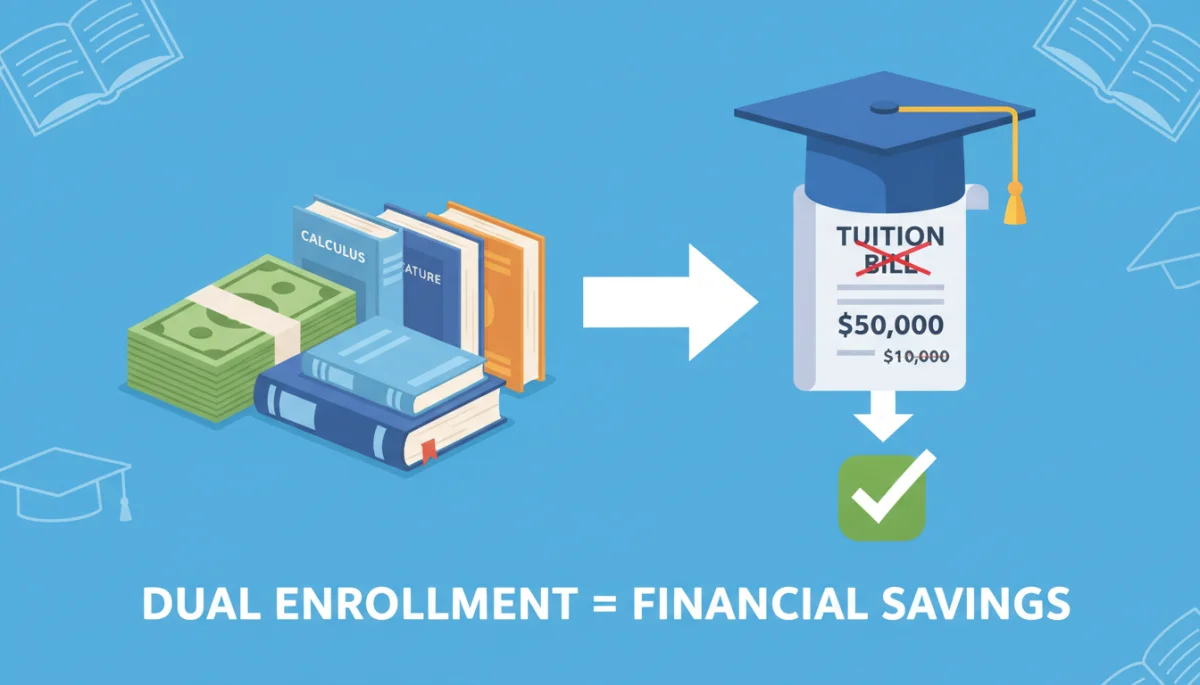
Dual enrollment programs offer substantial financial benefits for U.S. families, potentially saving up to $10,000 on college tuition by 2026, by allowing high school students to earn college credits, thereby reducing overall higher education costs and accelerating degree completion.
In an era where college tuition costs continue to escalate, understanding the financial impact of dual enrollment programs has become crucial for American families. These innovative programs offer a tangible pathway to significantly reduce the financial burden of higher education, potentially saving U.S. families up to $10,000 on college tuition by 2026. This article delves into how dual enrollment works, its economic benefits, and why it’s gaining traction as a smart financial strategy for college-bound students.
Understanding Dual Enrollment Programs
Dual enrollment allows high school students to take college-level courses and earn credits that count towards both their high school diploma and a future college degree. This can happen on a college campus, at their high school, or even online. The primary benefit is the ability to get a head start on college, often at a reduced cost or even for free, depending on the state and institution.
These programs are not new, but their popularity has surged as families seek ways to combat rising tuition fees and student loan debt. By enrolling in college courses while still in high school, students can effectively shave off semesters or even full years from their future college attendance, leading to substantial savings.
How Dual Enrollment Works
Typically, students apply to a participating college or university program, meeting specific academic criteria. Once accepted, they attend classes alongside traditional college students, experiencing the rigor and expectations of higher education firsthand. The credits earned are often transferable to many four-year institutions, though it’s always wise for families to verify transferability with their intended colleges.
- Students gain college credits while still in high school.
- Courses are often offered at a reduced rate or free.
- Credits can transfer to many universities, shortening college time.
- Provides an early exposure to college-level academics.
In essence, dual enrollment acts as a bridge, allowing students to transition more smoothly into college life while simultaneously making a significant dent in their future tuition expenses. This early exposure can also boost academic confidence and prepare students for the demands of university studies.
The Economic Advantage: Saving Thousands on College Tuition
The most compelling argument for dual enrollment lies in its direct financial benefits. With average college tuition and fees at public four-year institutions exceeding $10,000 annually for in-state students and much higher for out-of-state or private institutions, every credit earned in high school translates into real savings. By 2026, projections suggest these costs will continue to climb, making early credit acquisition even more valuable.
Consider a scenario where a student completes 30 college credits through dual enrollment—equivalent to a full year of college. If these credits are earned at a fraction of the cost, or entirely free, the savings can be monumental. Even if families pay a reduced fee per credit, the overall expenditure is significantly less than what they would pay for the same credits at a four-year university.
Projected Savings by 2026
Experts estimate that a student who maximizes dual enrollment opportunities could save anywhere from $5,000 to $10,000 or more, depending on the number of credits earned and the cost of tuition at their chosen college. These savings are not just theoretical; they directly reduce the amount of student loan debt a family might incur, or free up funds for other educational expenses.
- Reduced overall tuition costs.
- Fewer semesters needed for degree completion.
- Lower reliance on student loans.
- Opportunity to graduate earlier, entering the workforce sooner.
The impact extends beyond just tuition. By shortening the time spent in college, students also save on living expenses, textbooks, and other associated costs, further amplifying the financial advantage. This makes dual enrollment an incredibly attractive option for budget-conscious families aiming for higher education.
Beyond Financial Savings: Academic and Personal Benefits
While the financial incentives are a major draw, dual enrollment offers a wealth of academic and personal benefits that contribute to a student’s overall success. These advantages can profoundly shape a student’s college readiness and future academic trajectory, making the experience invaluable regardless of the monetary savings.
Students who participate in dual enrollment often perform better in college, demonstrating higher retention rates and achieving higher GPAs. This is largely due to the early exposure to college-level coursework, which helps them develop essential study habits, time management skills, and a deeper understanding of academic expectations before they even officially matriculate.
Enhanced College Readiness
Taking college courses in high school helps demystify the university experience. Students learn how to navigate a college syllabus, interact with professors, and manage a more demanding academic workload. This familiarity can significantly reduce the culture shock many first-year college students experience, leading to a smoother transition and greater academic confidence.
- Develops stronger study habits and time management skills.
- Familiarizes students with college-level expectations.
- Boosts confidence in academic abilities.
- Provides a competitive edge on college applications.
Furthermore, the opportunity to explore different academic fields through dual enrollment can help students solidify their major choices earlier, preventing costly changes in direction later in their college career. This early exploration can ensure students are on the right path, both academically and financially.
Navigating Dual Enrollment: Key Considerations for Families
While the benefits of dual enrollment are clear, families must carefully navigate the process to maximize its potential. This involves understanding program requirements, credit transfer policies, and the student’s readiness for college-level work. Thoughtful planning is essential to ensure a successful and financially beneficial experience.
The first step is to research local dual enrollment opportunities. Many community colleges and universities partner with high schools to offer these programs. Families should inquire about eligibility criteria, application deadlines, and any associated costs, as these can vary widely by institution and state. It’s also important to consider the student’s academic standing and maturity.
Maximizing Credit Transferability
One of the most critical aspects is ensuring that earned credits will transfer to the student’s desired four-year institution. Families should proactively contact the admissions offices of prospective colleges to confirm their dual enrollment credit policies. Some universities have specific requirements regarding the courses accepted or the minimum grade needed for transfer.
- Verify credit transfer policies with target colleges early.
- Understand specific course requirements for transfer.
- Ensure the student is academically and emotionally ready.
- Explore financial aid options specific to dual enrollment.
Additionally, families should discuss the workload with their student to prevent burnout. Balancing high school responsibilities with college-level courses requires significant dedication and effective time management. Open communication and support are vital for a positive experience.
Challenges and Solutions in Dual Enrollment
Despite its many advantages, dual enrollment is not without its challenges. These can range from academic rigor and scheduling conflicts to potential issues with credit transfer. However, with proper planning and communication, most of these hurdles can be effectively overcome, ensuring students reap the full benefits of these programs.
One common concern is the increased academic pressure. College courses are typically more demanding than high school classes, requiring greater independence and critical thinking. Students need to be prepared for this shift and have access to support resources if needed. High school counselors and college academic advisors can play a crucial role in guiding students.
Addressing Credit Transfer Issues
As mentioned, credit transferability can be a significant challenge. Some colleges may not accept all dual enrollment credits, or they may apply them as elective credits rather than fulfilling specific major requirements. The solution lies in early and thorough research. Families should create a list of potential colleges and contact each one to confirm their policies before enrolling in dual credit courses.
- Consult with high school counselors and college advisors.
- Confirm credit transfer policies with all prospective universities.
- Ensure course content aligns with future academic goals.
- Utilize college resources like tutoring and academic support.
Another challenge can be scheduling, especially for students balancing extracurricular activities or part-time jobs. Online dual enrollment courses can offer greater flexibility, but they also require strong self-discipline. Open communication between students, parents, and school officials is key to finding a workable schedule that supports academic success and personal well-being.
The Future of Dual Enrollment and College Affordability
As the cost of higher education continues to be a national concern, dual enrollment programs are poised to play an even more significant role in college affordability. Policy makers and educational institutions are increasingly recognizing the value of these programs, leading to expanded access and improved integration into college pathways. By 2026, we can expect to see further enhancements that solidify dual enrollment as a cornerstone of strategic college planning.
Many states are already investing in initiatives to make dual enrollment more accessible and affordable, including covering tuition costs or providing transportation for students. This trend is likely to continue, making it easier for a broader range of students to participate, regardless of their socioeconomic background. The focus is shifting towards creating seamless pathways from high school to college, with dual enrollment as a primary accelerator.
Policy and Institutional Support
Universities are also adapting, with more institutions streamlining their credit transfer processes and actively recruiting dual enrollment students. They recognize that these students are often better prepared for college rigor and are more likely to succeed. This symbiotic relationship benefits both students and institutions, fostering a more educated workforce.
- Increased state funding and support for dual enrollment.
- Improved credit transfer agreements between high schools and colleges.
- Greater awareness and promotion of dual enrollment benefits.
- Development of more diverse course offerings to meet student needs.
Ultimately, dual enrollment represents a powerful tool in the fight for college affordability. By leveraging these programs, U.S. families can significantly reduce the financial burden of higher education, ensuring that more students have the opportunity to pursue their academic and career aspirations without being encumbered by excessive debt.
| Key Aspect | Brief Description |
|---|---|
| Tuition Savings Potential | U.S. families can save up to $10,000 on college tuition by 2026 through dual enrollment. |
| Academic Head Start | Students earn college credits in high school, accelerating degree completion and boosting readiness. |
| Credit Transferability | Crucial to verify with prospective colleges to ensure earned credits are accepted for degree programs. |
| Enhanced College Success | Dual enrollment students often exhibit higher retention rates and better academic performance in college. |
Frequently Asked Questions About Dual Enrollment
Dual enrollment allows high school students to take college courses for both high school and college credit. It saves money because these courses are often free or significantly cheaper than regular college tuition, reducing the overall cost of a degree.
Families can realistically save up to $10,000 or more by 2026, depending on the number of credits earned and the specific college’s tuition rates. These savings can significantly reduce future college debt.
No, credit transferability is not guaranteed. It is crucial for families to contact the admissions offices of their prospective colleges to confirm their specific dual enrollment credit policies before enrolling in courses.
Beyond financial savings, dual enrollment enhances college readiness, develops stronger study habits, boosts academic confidence, and provides early exposure to college-level rigor, leading to a smoother transition and better performance.
To ensure success, families should research local programs, verify credit transfer policies, assess student readiness, and maintain open communication with school counselors and college advisors to manage workload and expectations effectively.
Conclusion
The financial impact of dual enrollment is undeniable, offering a powerful strategy for U.S. families to mitigate the escalating costs of higher education. By allowing high school students to earn valuable college credits at a reduced rate or for free, these programs provide a tangible pathway to saving thousands of dollars on tuition, potentially reaching up to $10,000 by 2026. Beyond the significant financial relief, dual enrollment also equips students with essential academic skills, fostering a smoother transition to college life and enhancing their overall educational journey. As college affordability remains a pressing issue, embracing dual enrollment stands out as an intelligent and effective approach to securing a brighter, debt-reduced future for the next generation of college graduates.
