2026 COBRA Coverage Guide: Maintain Health Benefits Up to 18 Months

Anúncios
Understanding the 2026 COBRA continuation coverage guide is crucial for individuals facing job transitions or other life changes, enabling them to maintain vital health benefits for up to 18 months.
Navigating changes in employment can be challenging, especially when it comes to healthcare. For many, the prospect of losing employer-sponsored health insurance is a significant concern. This is where COBRA continuation coverage guide becomes an indispensable resource, offering a lifeline for individuals and their families to maintain essential health benefits during transitional periods.
Understanding COBRA: What It Is and Who Qualifies
COBRA, which stands for the Consolidated Omnibus Budget Reconciliation Act, is a federal law that allows certain employees and their families to continue receiving health benefits after leaving a job or experiencing other qualifying events. This guide specifically focuses on the provisions for 2026, ensuring you have the most up-to-date information. It’s designed to bridge the gap in healthcare coverage, preventing lapses during critical times.
The primary goal of COBRA is to offer a temporary extension of group health coverage, typically for 18 months, but sometimes longer under specific circumstances. This means you can keep the same health plan you had with your former employer, which can be a huge relief, especially if you have ongoing medical treatments or prefer continuity of care. However, it’s important to remember that COBRA coverage is not free; you are generally responsible for the full premium, plus an administrative fee.
Key Qualifying Events for COBRA Eligibility
Several events can trigger your eligibility for COBRA. Understanding these is the first step in determining if you can elect this coverage.
- Voluntary or involuntary termination of employment (for reasons other than gross misconduct).
- Reduction in the number of hours of employment.
- Death of the covered employee.
- Divorce or legal separation from the covered employee.
- A covered employee becoming entitled to Medicare.
Each of these events has specific rules and timelines that must be followed for COBRA election. Missing a deadline can result in losing your right to continue coverage. It’s crucial to be proactive and informed about your options.
In conclusion, COBRA provides a vital safety net for healthcare coverage during significant life changes. Knowing what it is and the qualifying events that make you eligible is fundamental to utilizing this benefit effectively in 2026.
The 18-Month Standard: Navigating Your COBRA Duration
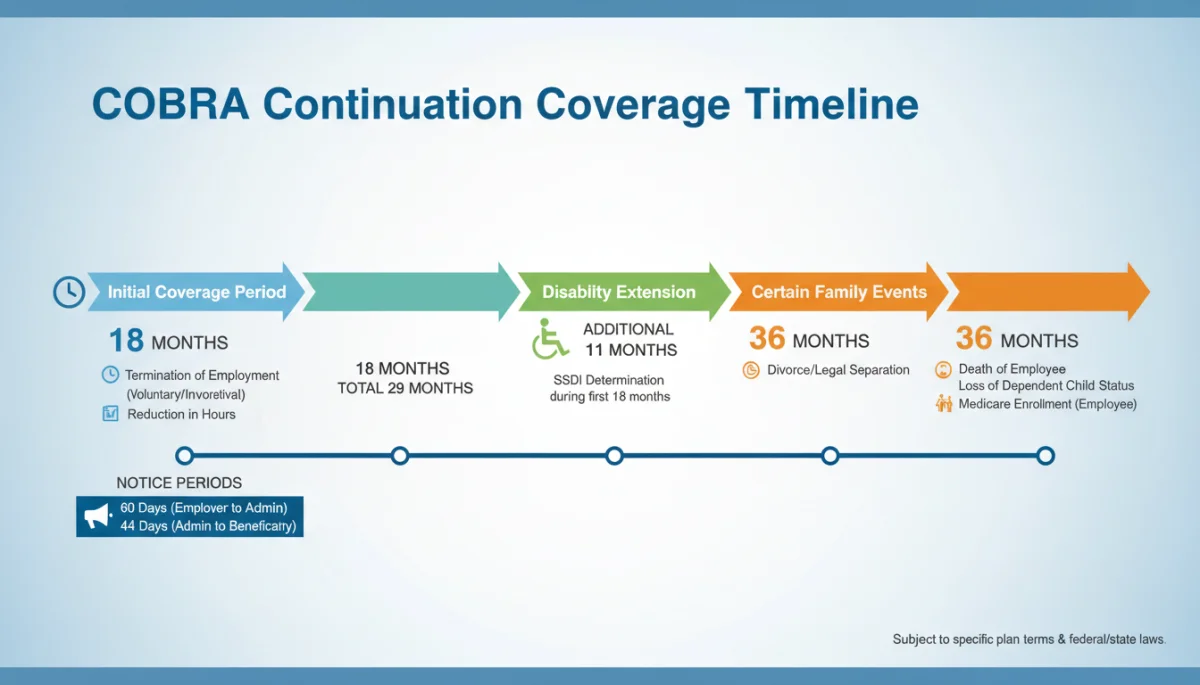
The most common duration for COBRA continuation coverage is 18 months. This period is primarily for individuals who lose their group health coverage due to termination of employment (voluntary or involuntary, except for gross misconduct) or a reduction in work hours. Understanding this standard duration is key to planning your healthcare strategy for 2026.
During this 18-month period, you maintain access to the same health benefits as active employees, including medical, dental, and vision coverage, if these were part of your original plan. The employer must continue to offer you the same choices they offer to current employees. This continuity can be invaluable, especially if you have established relationships with doctors or need specific medical care.
Extending Coverage Beyond 18 Months: Special Circumstances
While 18 months is the standard, COBRA coverage can be extended in certain situations. These extensions are not automatic and require specific actions or conditions to be met.
- Disability Extension: If a qualified beneficiary is determined by the Social Security Administration (SSA) to be disabled within the first 60 days of COBRA coverage, they may be eligible for an additional 11 months of coverage, totaling 29 months.
- Second Qualifying Event: If a second qualifying event (like divorce or a dependent child losing dependent status) occurs during the initial 18-month period, the coverage may be extended to a total of 36 months from the original qualifying event.
It’s important to note that these extensions often come with increased premium costs. For instance, the disability extension allows employers to charge up to 150% of the premium for the additional 11 months. Always review the detailed information provided by your plan administrator for exact costs and requirements.
In summary, while 18 months is the typical COBRA duration, specific life events and conditions can extend this period, offering further protection. Being aware of these possibilities is crucial for comprehensive healthcare planning in 2026.
Costs and Payment: Financial Considerations for COBRA in 2026
One of the most significant aspects of COBRA continuation coverage is its cost. Unlike employer-sponsored health insurance where the employer typically covers a substantial portion of the premium, with COBRA, you are generally responsible for the entire premium. This includes both the employer’s and the employee’s share, plus an administrative fee of up to 2%.
For 2026, it’s essential to budget for these expenses. The cost can be considerably higher than what you were paying as an active employee, making it a critical factor in your decision-making process. Employers are required to provide you with information regarding the cost of COBRA, so you can make an informed choice.
Understanding Premium Calculations and Payment Deadlines
COBRA premiums are calculated based on the cost of the group health plan for similarly situated active employees. This means the premium reflects the full cost of the insurance, without any employer contribution. Payment deadlines are strict, and missing them can lead to the termination of your coverage.
- Initial Payment: You typically have 45 days from the date of your COBRA election to make your first premium payment.
- Subsequent Payments: After the initial payment, you usually have a 30-day grace period for each monthly payment.
- Notice of Payment Due: Your plan administrator is required to send you notices regarding payment due dates.
It’s important to establish a clear payment schedule and ensure funds are available. Consider setting up automatic payments if your plan offers this option to avoid accidental lapses in coverage. If you are struggling with the cost, explore other alternatives like the Health Insurance Marketplace, which might offer more affordable options, potentially with subsidies.
Ultimately, the financial implications of COBRA are substantial. Thoroughly understanding the costs and adhering to payment schedules are paramount to maintaining your health benefits through 2026.
COBRA vs. Marketplace: Comparing Your Health Coverage Options
When facing the loss of employer-sponsored health coverage, COBRA is one option, but it’s not the only one. The Health Insurance Marketplace, established under the Affordable Care Act (ACA), offers an alternative that can sometimes be more affordable, especially for individuals and families with lower incomes. Understanding the differences between COBRA and Marketplace plans is crucial for making the best decision for your healthcare needs in 2026.
COBRA allows you to continue your existing plan, which can be beneficial for continuity of care and if you’ve met your deductible for the year. However, as discussed, it can be expensive. The Marketplace, on the other hand, offers a range of plans with varying coverage levels and costs, and you may be eligible for premium tax credits and cost-sharing reductions based on your income.
Making an Informed Decision: Factors to Consider
Choosing between COBRA and a Marketplace plan involves weighing several factors unique to your situation.
- Cost: Compare the COBRA premium to the premiums of Marketplace plans, taking into account any potential subsidies you might qualify for.
- Coverage: Evaluate if maintaining your current plan (COBRA) is more important than potentially switching to a new plan with different benefits and provider networks (Marketplace).
- Deductibles and Out-of-Pocket Maximums: Consider if you’ve already met a significant portion of your deductible under your old plan, as this might favor COBRA.
- Provider Network: Check if your preferred doctors and specialists are in-network with any potential Marketplace plans.
It’s important to remember that a job loss or reduction in hours is a qualifying event that triggers a Special Enrollment Period (SEP) for the Marketplace, allowing you to enroll outside of the annual Open Enrollment period. This gives you a window to explore and compare options.
In conclusion, both COBRA and the Health Insurance Marketplace offer paths to continuous health coverage. A careful comparison of costs, coverage, and personal circumstances will guide you to the most suitable choice for 2026.
Electing COBRA: The Notification and Enrollment Process
Once a qualifying event occurs, there are specific steps and timelines that must be followed for you to elect COBRA continuation coverage. Understanding this process is vital to ensure you don’t miss any critical deadlines and lose your right to coverage. The process typically begins with notifications from your employer and plan administrator.
Your employer has 30 days after a qualifying event to notify the plan administrator. The plan administrator then has 14 days to send you an election notice, which includes details about your rights, coverage options, and costs. You, as the qualified beneficiary, then have 60 days from the date of the election notice (or the date your coverage would end, whichever is later) to decide whether to elect COBRA.
Crucial Deadlines and Taking Action
Missing these deadlines can have severe consequences, including the permanent loss of your COBRA rights. It’s imperative to act promptly once you receive the necessary information.
- Employer Notification: Employer must notify plan administrator within 30 days of qualifying event.
- Plan Administrator Notification: Plan administrator must provide election notice within 14 days of receiving employer’s notification.
- Beneficiary Election Period: You have 60 days to elect COBRA from the date of the election notice or the date your coverage would end, whichever is later.
Carefully review all documents sent by your employer and plan administrator. If you haven’t received an election notice within a reasonable timeframe after a qualifying event, proactively contact your former employer’s HR department or the plan administrator. Keep copies of all correspondence and records of when you sent or received documents.
In summary, the election process for COBRA is time-sensitive and requires careful attention to detail. Being aware of the notification timelines and taking prompt action are key to securing your continuation coverage for 2026.
Important Considerations and Best Practices for 2026
As you navigate the complexities of COBRA continuation coverage in 2026, there are several important considerations and best practices that can help you make informed decisions and avoid potential pitfalls. Beyond understanding eligibility and costs, strategic planning is essential to ensure seamless healthcare coverage.
One key consideration is to assess your healthcare needs accurately. If you anticipate needing extensive medical care, continuing your existing plan through COBRA might be more beneficial, especially if you’ve already met your deductibles. Conversely, if your health needs are minimal, a more affordable Marketplace plan could be a better fit. Always factor in your family’s health history and any expected medical expenses.
Proactive Steps for Smooth COBRA Management
Taking proactive steps can significantly ease the process of managing your COBRA coverage.
- Maintain Records: Keep meticulous records of all COBRA-related documents, including election notices, payment confirmations, and correspondence.
- Understand Your Plan: Familiarize yourself with the specifics of your continued health plan, including deductibles, co-pays, and network restrictions.
- Explore Alternatives: Continuously evaluate other health coverage options, such as a spouse’s plan or the Health Insurance Marketplace, especially if your financial situation changes.
- Seek Guidance: If you have complex questions or unique circumstances, consider consulting with a benefits specialist or an insurance broker.
Remember that COBRA is a temporary solution. While it provides valuable continuity, it’s often more expensive than other options. Use the coverage period to research and secure a long-term healthcare solution that fits your budget and needs.
In conclusion, effective management of your COBRA coverage in 2026 involves careful consideration of your health needs, proactive record-keeping, and a willingness to explore all available alternatives to ensure uninterrupted access to healthcare.
| Key Point | Brief Description |
|---|---|
| Standard Duration | Most COBRA coverage lasts 18 months for job loss or reduced hours. |
| Cost Responsibility | You pay the full premium plus an administrative fee (up to 102%). |
| Election Period | You have 60 days to elect COBRA after receiving the election notice. |
| Alternatives | Consider the Health Insurance Marketplace for potentially subsidized options. |
Frequently Asked Questions About COBRA in 2026
COBRA’s main purpose is to allow individuals and their families to maintain their group health benefits temporarily after certain qualifying events, such as job loss or reduction in hours, ensuring continuity of healthcare coverage.
For most qualifying events like job termination or reduced work hours, COBRA continuation coverage can be maintained for up to 18 months. Extensions are possible under specific disability or second qualifying event conditions.
Yes, generally you are responsible for the entire premium cost of your COBRA coverage, which includes both the employer’s and employee’s share, plus an administrative fee of up to 2%.
You should consider the Health Insurance Marketplace if COBRA premiums are too high, or if you might qualify for premium tax credits or subsidies based on your income, potentially making Marketplace plans more affordable.
If you miss a COBRA premium payment, your coverage may be terminated. Most plans offer a 30-day grace period for subsequent payments, but it’s crucial to pay on time to avoid losing your benefits.
Conclusion
The 2026 COBRA continuation coverage guide serves as an essential resource for anyone facing transitions that impact their health insurance. By understanding the intricacies of COBRA, including eligibility, duration, costs, and the election process, individuals can make informed decisions to safeguard their health and financial well-being. While COBRA offers a vital temporary bridge, it’s also crucial to explore all available alternatives, such as the Health Insurance Marketplace, to find the most suitable and sustainable long-term healthcare solution. Proactive planning and diligent record-keeping remain key to navigating these complex waters effectively.
