Navigating 2026 Tax Law Changes: Optimize Capital Gains by 10%

Anúncios
U.S. investors must proactively adapt to impending 2026 tax law changes by implementing strategic planning, maximizing tax-advantaged accounts, and diversifying portfolios to optimize capital gains by 10%.
As we approach 2026, understanding and preparing for the impending
Understanding the Looming 2026 Tax Landscape
The current tax framework, largely shaped by the Tax Cuts and Jobs Act (TCJA) of 2017, is set to undergo significant changes at the end of 2025. Many provisions, particularly those affecting individual income tax rates, standard deductions, and various itemized deductions, are scheduled to expire. For investors, this expiration could mean a return to higher tax rates, potentially impacting the taxation of capital gains and qualified dividends.
These changes are not merely minor adjustments; they represent a fundamental shift that could alter investment profitability. Without proper foresight and strategic adjustments, investors might find their after-tax returns significantly eroded. It’s crucial to recognize that legislative changes, while sometimes subject to political negotiation, often proceed as scheduled unless new legislation is enacted to extend or modify existing provisions.
Key TCJA Provisions Expiring
- Individual income tax rate reductions across most brackets.
- Increased standard deduction amounts.
- Limitations on the state and local tax (SALT) deduction.
- Adjustments to the alternative minimum tax (AMT) exemption.
The expiration of these provisions means that tax brackets could revert to pre-TCJA levels, leading to higher marginal tax rates for many individuals. This directly affects how capital gains are taxed, as these gains are often taxed at rates tied to an individual’s ordinary income bracket. Therefore, a higher ordinary income tax bracket could translate to a higher capital gains tax rate for some investors. Understanding these potential shifts is the first step in crafting an effective strategy to protect and grow your wealth.
Strategy 1: Proactive Tax-Loss Harvesting and Gifting
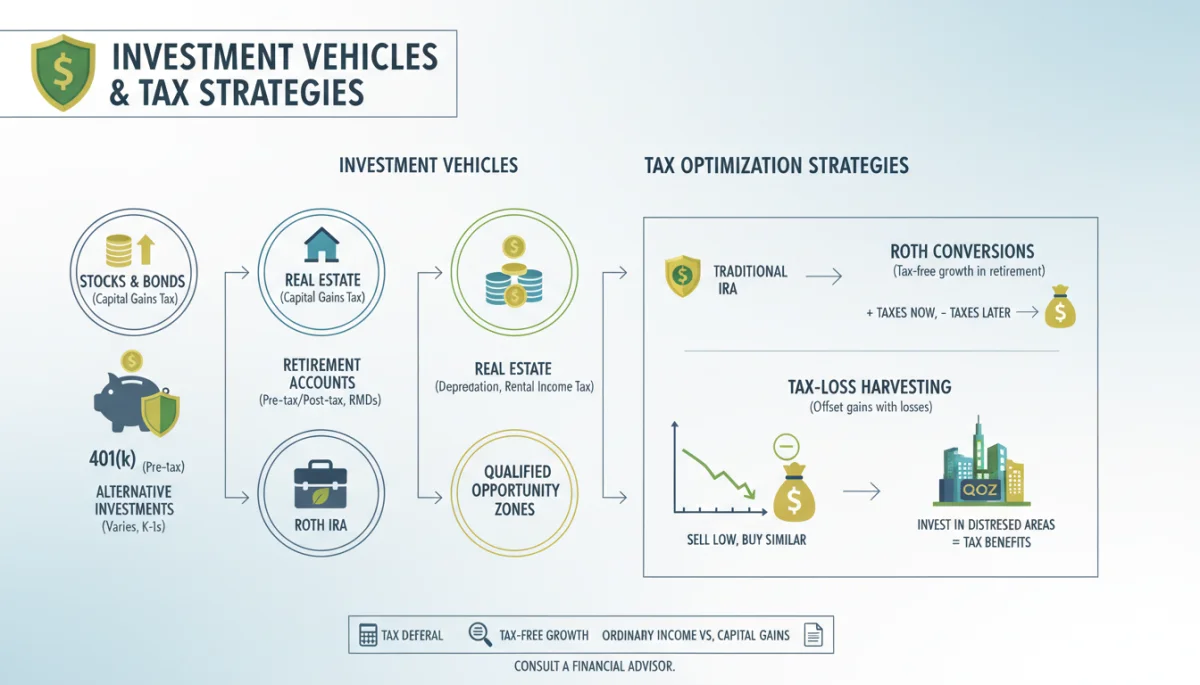
One of the most effective and often underutilized strategies for mitigating capital gains taxes is proactive tax-loss harvesting. This involves strategically selling investments at a loss to offset capital gains and, if losses exceed gains, up to $3,000 of ordinary income annually. In anticipation of potential higher tax rates in 2026, accelerating tax-loss harvesting in 2024 and 2025 could be particularly beneficial.
Consider reviewing your investment portfolio regularly for positions that have experienced significant declines. Selling these assets before year-end, especially if you have realized substantial gains from other investments, can reduce your overall taxable income. The key is to rebalance your portfolio carefully, ensuring you don’t violate the wash-sale rule by repurchasing substantially identical securities within 30 days before or after the sale.
Optimizing Your Harvesting Schedule
- Year-End Reviews: Conduct thorough portfolio reviews in the last quarter of each year to identify loss candidates.
- Gain Matching: Prioritize offsetting short-term capital gains with short-term capital losses, as short-term gains are taxed at ordinary income rates.
- Long-Term Benefits: Utilize long-term capital losses to offset long-term gains, or up to $3,000 of ordinary income if losses exceed gains.
Beyond tax-loss harvesting, strategic gifting can also play a role in optimizing capital gains. Gifting appreciated assets to individuals in lower tax brackets, such as children or grandchildren, before they are sold can allow those assets to be sold at a lower capital gains tax rate. This strategy requires careful planning and adherence to annual gift tax exclusion limits, but it can be a powerful tool for intergenerational wealth transfer and tax efficiency. Consulting with a financial advisor is highly recommended to navigate the complexities of these strategies and ensure compliance with all IRS regulations.
Strategy 2: Maximizing Tax-Advantaged Investment Vehicles
As the tax landscape shifts, leveraging tax-advantaged investment vehicles becomes even more critical. These accounts offer various benefits, from tax-deferred growth to tax-free withdrawals, significantly reducing your overall tax burden on investment earnings. Understanding and maximizing contributions to these accounts can be a cornerstone of your 2026 tax strategy.
Individual Retirement Accounts (IRAs) and 401(k)s are prime examples. Traditional IRAs and 401(k)s allow pre-tax contributions to grow tax-deferred until retirement, reducing your current taxable income. Roth IRAs and Roth 401(k)s, while funded with after-tax dollars, offer tax-free withdrawals in retirement, making them incredibly valuable if you anticipate being in a higher tax bracket later in life, which is a real possibility with the 2026 changes.
Exploring Advanced Tax-Advantaged Options
Beyond the standard retirement accounts, consider other specialized vehicles:
- Health Savings Accounts (HSAs): Often called a triple-tax advantage account, HSAs offer tax-deductible contributions, tax-free growth, and tax-free withdrawals for qualified medical expenses. For those with high-deductible health plans, an HSA can be a powerful investment tool.
- Qualified Opportunity Funds (QOFs): These funds allow investors to defer and potentially reduce capital gains by reinvesting them into designated low-income communities. While complex, QOFs can offer substantial tax benefits for long-term investments.
- 529 Plans: For education savings, 529 plans offer tax-free growth and withdrawals for qualified educational expenses. While not directly for capital gains, they reduce the need to draw from taxable investment accounts for educational costs.
The key to maximizing these vehicles lies in consistent contributions and understanding their specific rules and limitations. Regularly reviewing your contribution limits and aligning them with your financial goals can ensure you are fully leveraging these powerful tax-saving tools. With potential tax increases on the horizon, these accounts provide a vital shield against erosion of your investment returns.
Strategy 3: Diversifying with Tax-Efficient Investments
Diversification is a well-known principle in investing, but its role in tax efficiency often gets overlooked. Beyond spreading risk, diversifying into investments that offer inherent tax advantages can significantly optimize your capital gains in a changing tax environment. This involves looking beyond traditional stocks and bonds to include assets with favorable tax treatments.
Municipal bonds, for instance, are an excellent option for high-income investors. The interest earned on municipal bonds is generally exempt from federal income tax and, in many cases, state and local taxes if you reside in the issuing state. This tax exemption can make their after-tax yield highly competitive, especially if ordinary income tax rates rise in 2026.
Considerations for Tax-Efficient Diversification
- Dividend Stocks vs. Growth Stocks: Evaluate your exposure to dividend-paying stocks. While qualified dividends receive preferential tax treatment, an increase in ordinary income tax rates could still impact them. Balancing with growth stocks, where gains are realized upon sale, allows for more control over when taxes are incurred.
- Real Estate Investments: Direct real estate investments can offer depreciation deductions, which can offset rental income and potentially other income. Furthermore, 1031 exchanges allow investors to defer capital gains tax when selling one investment property and reinvesting the proceeds into a similar property.
- Exchange-Traded Funds (ETFs): ETFs are generally more tax-efficient than actively managed mutual funds due to their structure. They typically generate fewer capital gains distributions, which can be a significant advantage in a rising tax rate environment.
The goal is to construct a portfolio that not only aligns with your risk tolerance and financial objectives but also minimizes your taxable income and capital gains exposure. Regular consultation with a financial advisor is essential to ensure your diversification strategy remains aligned with your overall financial plan and adapts to ongoing tax law changes. By strategically incorporating these tax-efficient investments, you can build a more resilient portfolio capable of weathering future tax adjustments and optimizing your long-term returns.
The Impact of Potential Estate Tax Changes
While the primary focus for many investors is on income and capital gains taxes, the 2026 tax law changes also hold significant implications for estate and gift taxes. The current federal estate tax exemption, significantly increased by the TCJA, is also set to revert to its pre-TCJA levels, adjusted for inflation. This could mean a substantially lower exemption amount, impacting high-net-worth individuals and their estate planning strategies.
For those with sizable estates, the reduction in the exemption could expose a larger portion of their assets to the federal estate tax, which carries a top rate of 40%. This makes proactive estate planning not just beneficial but imperative. Strategies such as lifetime gifting, utilizing trusts, and other wealth transfer techniques become even more critical to minimize potential estate tax liabilities.
Estate Planning Strategies to Consider
- Lifetime Gifting: Maximize current annual gift tax exclusions to transfer wealth out of your estate tax-free.
- Irrevocable Trusts: Establish various types of irrevocable trusts (e.g., GRATs, SLATs) to remove assets from your taxable estate while potentially retaining some control or income streams.
- Charitable Giving: Incorporate charitable giving strategies, such as charitable remainder trusts or donor-advised funds, to reduce estate size and achieve philanthropic goals.
Understanding these potential shifts in estate tax law allows investors to make informed decisions about their legacy. It’s not just about what you earn, but what you can pass on. The window before 2026 offers a unique opportunity to utilize the higher current exemptions for significant wealth transfers. Engaging with an estate planning attorney and financial advisor is crucial to developing a comprehensive plan that addresses both income and estate tax considerations, ensuring your wealth is preserved across generations.
Rebalancing Your Portfolio for Tax Efficiency
Rebalancing is a fundamental aspect of portfolio management, ensuring your asset allocation remains aligned with your risk tolerance and financial goals. However, in light of the impending 2026 tax law changes, rebalancing takes on an added layer of complexity and importance: tax efficiency. This means not just adjusting asset classes but doing so in a way that minimizes your tax liability.
When rebalancing, consider the tax implications of selling appreciated assets. If you need to sell to bring your portfolio back into alignment, prioritize selling assets held in tax-advantaged accounts first, as these sales won’t trigger immediate capital gains taxes. For taxable accounts, strategically use tax-loss harvesting opportunities to offset any gains realized during rebalancing. This integrated approach ensures that your rebalancing efforts support your overall tax optimization goals.
Key Rebalancing Considerations
- Account Prioritization: Always consider selling from tax-deferred or tax-exempt accounts first when reducing positions.
- Tax-Loss Harvesting Integration: Combine rebalancing with tax-loss harvesting to neutralize capital gains.
- Future Tax Rates: Anticipate how future tax rates might impact the decision to realize gains now versus deferring them.
Furthermore, consider adjusting your asset location strategy. This involves deciding which types of investments to hold in taxable versus tax-advantaged accounts. For example, highly appreciated assets or those that generate significant ordinary income (like bonds or REITs) are often best held in tax-deferred accounts. Conversely, investments that generate qualified dividends or long-term capital gains might be suitable for taxable accounts, given their preferential tax treatment, even if those rates might increase slightly in 2026. A well-thought-out asset location strategy can significantly enhance your after-tax returns over the long term, making your portfolio more robust against future tax changes.
Seeking Professional Guidance for 2026 Tax Changes
Navigating the complexities of impending tax law changes requires more than just a cursory understanding; it demands expert knowledge and tailored strategies. While the information presented here provides a solid foundation, the specific nuances of your financial situation necessitate personalized advice. Engaging with qualified financial professionals, such as certified financial planners (CFPs) and tax advisors, is not just recommended but essential to effectively prepare for 2026.
These professionals can offer invaluable insights into how the specific provisions of the expiring TCJA will impact your unique investment portfolio and overall financial plan. They can help you analyze your current holdings, identify potential tax liabilities, and develop a comprehensive strategy that integrates the three key strategies discussed: proactive tax-loss harvesting, maximizing tax-advantaged vehicles, and diversifying with tax-efficient investments. Their expertise ensures that you not only comply with all tax regulations but also optimize your financial outcomes.
Benefits of Professional Consultation
- Personalized Analysis: Receive tailored advice based on your income, assets, and financial goals.
- Up-to-Date Knowledge: Benefit from their current understanding of tax laws and proposed legislative changes.
- Strategic Implementation: Get assistance in executing complex strategies like advanced estate planning or sophisticated asset location.
Moreover, tax laws are dynamic and subject to change. A professional advisor can help you stay abreast of any new developments or last-minute legislative adjustments that might occur before or during 2026. They can also assist with ongoing monitoring and adjustments to your strategy as your financial situation evolves. The investment in professional guidance can yield significant returns by safeguarding your wealth and helping you achieve your long-term financial objectives, ultimately aiming to optimize your capital gains by 10% or more.
| Key Strategy | Brief Description |
|---|---|
| Tax-Loss Harvesting | Sell losing investments to offset capital gains and reduce taxable income. |
| Tax-Advantaged Accounts | Utilize IRAs, 401(k)s, HSAs for tax-deferred or tax-free growth. |
| Tax-Efficient Diversification | Invest in municipal bonds, ETFs, and real estate for favorable tax treatment. |
| Estate Tax Planning | Prepare for potential lower estate tax exemptions through gifting and trusts. |
Frequently Asked Questions About 2026 Tax Changes
The main changes in 2026 stem from the expiration of many provisions of the Tax Cuts and Jobs Act (TCJA) of 2017. This includes potential reverts to higher individual income tax rates, reduced standard deductions, and changes to the alternative minimum tax, all impacting capital gains and investment income.
Tax-loss harvesting allows you to sell investments at a loss to offset realized capital gains. If your losses exceed your gains, you can deduct up to $3,000 of those losses against your ordinary income, reducing your overall taxable income and potentially lowering your tax bill.
Traditional and Roth IRAs/401(k)s are crucial for tax-deferred or tax-free growth and withdrawals. Health Savings Accounts (HSAs) offer triple tax advantages for eligible individuals, providing tax-deductible contributions, tax-free growth, and tax-free withdrawals for medical expenses.
Asset location involves strategically placing different types of investments into taxable or tax-advantaged accounts. For instance, putting high-income-generating assets like bonds in tax-deferred accounts can minimize current tax liabilities, while growth stocks might be suitable for taxable accounts if long-term capital gains are expected.
It’s advisable to consult a financial advisor as soon as possible. Proactive planning allows ample time to implement strategies before 2026. An advisor can provide personalized guidance, help you understand the specific impacts on your portfolio, and ensure your strategies align with your financial goals.
Conclusion
The impending 2026 tax law changes present both challenges and opportunities for U.S. investors. By proactively adopting strategies such as diligent tax-loss harvesting, maximizing tax-advantaged investment vehicles, and diversifying with tax-efficient assets, you can significantly mitigate potential negative impacts and enhance your after-tax returns. These strategic adjustments, coupled with professional guidance, are vital for navigating the evolving tax landscape and ensuring your investment portfolio remains robust and optimized for growth. Start your digital journey with ease by taking these critical steps today to secure your financial future.
